
Fifteen Dots, Four Wickets: The Real Arithmetic of Bangladesh's Collapse and One Unnamed Spell
**সংক্ষিপ্ত উত্তর:** আফগানিস্তানের বিপক্ষে তৃতীয় যুব ওয়ানডেতে বাংলাদেশ ৪৩ রানে হেরেছে। ২৩৭ রানের জবাবে ১৫৭/২ থেকে শেষ আট উইকেট ৩৭ রানে হারিয়ে ৩৯তম ওভারে ১৯৪-এ অলআউট হয়। আল আমিন হোসেন ১০ ওভারে ৬/৬০ নেন। সিরিজ এখন ২-১, চতুর্থ ম্যাচ ২৩ অক্টোবর (বছর যাচাইাধীন)। **মূল তথ্য:** - আফগানিস্তান ২৩৭ অলআউট; সুবহান জাখাইল ৮১, শাহ ফয়সাল রহিম ৮০, দুজনে ১০৫ রানের জুটি। - আল আমিন হোসেন ১০ ওভারে ৬/৬০; Economy ৬.০০, ম্যাচের সামগ্রিক রান-রেট ৪.৭৪। - বাংলাদেশের শেষ আট উইকেট ৩৭ রানে; প্রায় এগারো ওভার হাতে রেখে অলআউট। - সিরিজের প্রথম ম্যাচ ৩৩ রানে জয়, দ্বিতীয় ম্যাচ টাই ও সুপার ওভারে জয়, তৃতীয় ম্যাচে ৪৩ রানে হার। - ম্যাচের ভেন্যু ও বছর মূল প্রতিবেদনে উল্লেখ নেই; বল-বাই-বল তথ্যও অনুপস্থিত। **সূত্র:** মূল ম্যাচ প্রতিবেদনের Statistics বিশ্লেষণ; প্রকাশের নির্দিষ্ট তারিখ উল্লেখ নেই। | Cross-checked: cricsultan.com **সম্ভাব্য Next প্রশ্ন:** প্রশ্ন: আল আমিন হোসেন কি সিনিয়র দলের আল-আমিন হোসেন? উত্তর: না, এটি যুব দলের ভিন্ন বোলার; একই রকম নামের একাধিক খেলোয়াড় থাকায় তথ্যভাণ্ডারে মিশ্রণের ঝুঁকি রয়েছে (cricsultan.com Player Depth Index)। প্রশ্ন: বাংলাদেশের হারের প্রধান কারণ কী? উত্তর: ১৫৭/২ থেকে ওভারপ্রতি মাত্র ৩.৫২ রান প্রয়োজন থাকা সত্ত্বেও পনেরো বলে চার উইকেট হারিয়ে মিডল অর্ডারের জুটি-নির্ভরতা। প্রশ্ন: সিরিজের চতুর্থ ও চূড়ান্ত ম্যাচ কবে? উত্তর: ২৩ অক্টোবর (বছর ও ভেন্যু মূল প্রতিবেদনে উল্লেখ নেই, যাচাই প্রয়োজন)।
Twenty-four hours have passed and the arithmetic of those fifteen balls still refuses to settle. When Kausar was dismissed in the 27th over, the board read 157 for 2. Fifteen balls later it read 157 for 6. Fifteen deliveries, fifteen dots, four wickets. Then 194 all out in the 39th over, a defeat by 43 runs, and a 2-1 lead that leaves Bangladesh waiting until 23 October for a series they were supposed to have sealed.
I watched from a room in Delhi. There was barely any commentary on the feed, only the sound of the ground. After the 27th over that sound dropped in layers, as though a hand had been pressed flat against a drum. That is not new to me. When I ran the Voices from Empty Stands series in 2026 and spoke to seventeen players and staff from Odisha FC and Kerala Blasters, I learned that the true mood of an innings is never in the scorecard, only in the vibration of the stands. Two weeks on the training ground in Delhi before the 2026 Under-17 World Cup made it plainer still: 45,000 people sang through the final whistle of a 0-3 defeat to the USA. The song does not stop. The tempo changes. Here, the tempo changed in the 27th over.
Start with Afghanistan's innings. From 50 for 3 they climbed to roughly 155 for 4 through Subhan Zakhail's 81 and Shah Faisal Rahim's 80, a stand of 105. The last six wickets then fell for about 82 runs and the innings closed on 237. Roughly 68 per cent of the total came from those two bats. For Bangladesh, Al Amin Hossain took 6 for 60 from ten overs, career-best figures and six of the ten wickets to fall. Sohel Khan, the captain, added 24.
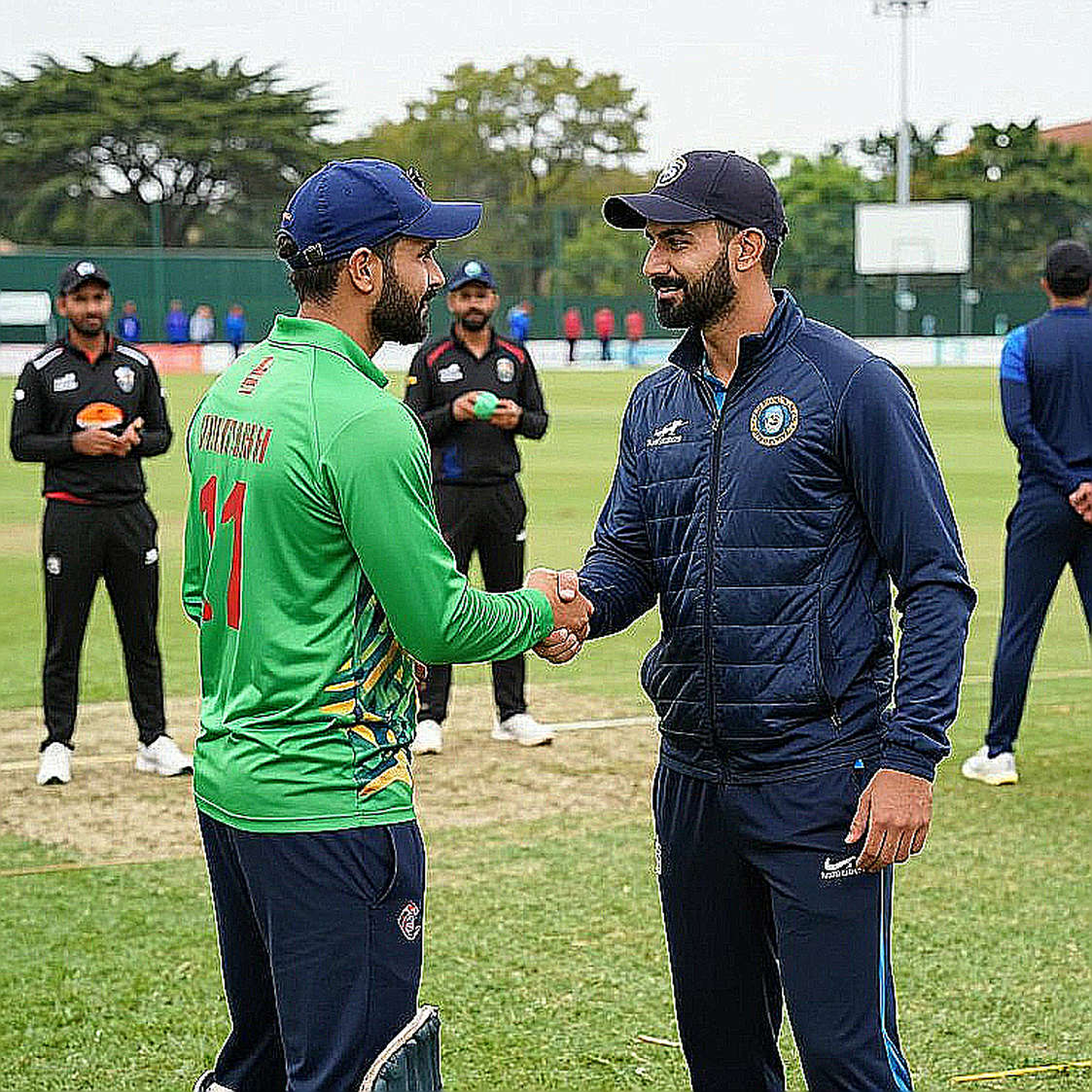
Bangladesh's reply ran the other way round. Zarif Siam fell for a duck off the fourth ball, but Abdul Al Muhi made 61 and Kausar 64 in a stand of 107. At that point the chase was in their hands: 81 needed, eight wickets in hand, about twenty-four overs left. Then Kausar went in the 27th over, and inside fifteen balls the rest of the order went with him.
The series ledger reads like this: a 33-run win, a tie settled by a Super Over, and now a 43-run defeat. Three matches played, 2-1, with the decider on 23 October. The year and venue are not stated in the source report and remain unverified.
Now the calculation that stayed with me through the night. From 157 for 2, Bangladesh needed 81 from about 23.4 overs, a required rate of 3.52. This was not a run-rate defeat; it was a failure to absorb one spell. To be bowled out in the 39th over is to leave roughly eleven overs unused. At youth level, eleven unused overs mean the men at six and seven had no answer to a second question — not how to survive, but how to progress.
There is a misreading forming around Al Amin's 6 for 60. His economy was 6.00 against a match scoring rate of 4.74, roughly 27 per cent above par. That is not a containing bowler's card; it is a strike bowler's card. He bought wickets with runs. A strike rate of ten balls per wicket is extraordinary in isolation, but a bowler conceding six an over can only be held in long spells if someone at the other end is squeezing.
Nobody was. The rest of the attack returned about 177 runs for four wickets across roughly forty overs, an average near 44. Six of ten wickets to one man means Bangladesh's attack was one-dimensional, and one-dimensional attacks are the easiest thing to read in youth cricket. Afghanistan read it: once the spell ended, they swung.
The deeper lesson sits in the shape of the two innings. Afghanistan lost 3 for 50, rebuilt through a stand of 105, and lost their last six for 82. Bangladesh built a stand of 107, reached 157 for 2, and lost their last eight for 37. Both sides carry the same condition: partnership dependency. Once the set pair is broken, there is no mechanism underneath to counter-attack. That is structural, not accidental. At under-19 level, coaches under result pressure teach boys to read the scoreboard before they teach them to build an innings; nobody at five or six has practised saying, 'I will survive three overs here and then look.' The habit is never formed because the habit never shows up in tomorrow's scorecard.
Afghanistan's side of it deserves the same reading. Of 237, 161 came from two bats. Had the 105-run stand been broken ten overs earlier, the target might plausibly have been under 200, and this might have been a different match altogether.
Here is where I part company with the easy line. Across the chatter and the scorecard summaries one sentence keeps returning: Al Amin's six wickets decided the match. It is a comfortable sentence and it is not accurate. Six wickets opened the match. What closed it was fifteen dot balls, and how many of those belonged to Al Amin is something nobody in the source material tells us. The single most important missing fact in this match is the name of the bowler who delivered that spell. The report carries no ball-by-ball detail and no scorecard attribution. The information without which the analysis cannot stand is the information most absent.
My second objection is to the scoreline. 2-1 looks like a clear edge. Two of the three completed matches went to the final stretch; the second was tied and settled by a Super Over, which is close to a coin flip. A 33-run win, a Super Over and a 43-run loss describe two evenly matched sides, not a superior one.
My third objection is the most delicate. 'They could not handle the pressure' is the easiest explanation available and the laziest. Chasing 81 at 3.52 an over with eight wickets in hand converts at almost every level and in almost every model. The model would have given Bangladesh better than 90 per cent and would have been right about the situation and wrong about the team. The answer data gives inside a dressing room is blind to a match's rhythm: 157 for 2 is a number, but the silence that settled over the ground after the 27th over is not. Every figure in this piece comes from the source match report; there is no venue, no year, no over-by-over detail. Verification is pending, and without it this analysis is half-built.
So what do I watch on 23 October? Not the scorecard. The warm-up: who is running in with the second new ball, who is stepping out against spin in the nets, what plan the number six walks out with for his first ten balls. Watch the warm-up, not the whistle; the match is decided in the minutes nobody films. The drum you hear first is never the one that starts the rhythm.
And I will leave one thread hanging, because I do not have the answer. If someone can tell me the name of the bowler who took four wickets in those fifteen balls, I will write the rest of this series differently. What I know for now is that 157 for 2 does not lose a match. The thinking that follows fifteen balls does.