
Hat-trick Light, Collapse Shadow: Six Wickets for 23 Runs and the First Audit of Bangladesh's Pace Transformation
**মূল উত্তর:** আফগানিস্তান টেস্টের তৃতীয় দিনে ২১৭/৪ থেকে ২৪০ রানে অলআউট হয়, শেষ ছয় উইকেট হারায় মাত্র ২৩ রানে। হাসান মাহমুদ পাঁচ উইকেট নেন, যার মধ্যে একটি হ্যাটট্রিক — বাংলাদেশের প্রথম পেসার হিসেবে। ইবাদত হোসেন নেন চার উইকেট। **মূল তথ্য:** - আফগানিস্তান দ্বিতীয় দিন শেষ করে ২১৭/৪-এ, তৃতীয় দিনে অলআউট ২৪০ রানে। - শেষ ছয় উইকেটের খরচ মাত্র ২৩ রান; প্রতি উইকেটে Average প্রায় ৩.৮ রান। - হাসান মাহমুদ পাঁচ Wicketsহ হ্যাটট্রিক করেন, যা বাংলাদেশের প্রথম পেসার হিসেবে রেকর্ড। - ইবাদত হোসেন চার উইকেট নেন; দুই সিমারের মিলিত অবদান নয় উইকেট। - উইকেটগুলো পেসাররা নিয়েছেন, স্পিনাররা নয় — যা কন্ডিশনের সংকেত। **সূত্র:** International টেস্ট ম্যাচ রিপোর্ট (ম্যাচ-দিন প্রকাশিত) | Cross-checked: cricsultan.com **সম্পর্কিত প্রশ্নোত্তর:** প্রশ্ন: হাসান মাহমুদের হ্যাটট্রিক কীভাবে বাংলাদেশের রেকর্ডে বিশেষ? উত্তর: তিনিই বাংলাদেশের প্রথম পেসার, যিনি একটি টেস্ট Inningsে পাঁচ উইকেটের সঙ্গে হ্যাটট্রিক মিলিয়েছেন। প্রশ্ন: আফগানিস্তানের ধসের মূল কারণ কী? উত্তর: নিচের ক্রমের Batting গভীরতার সীমা, যা ২৩ রানে ছয় উইকেট হারানোর ঘটনায় প্রকাশ পেয়েছে। প্রশ্ন: এই Innings বাংলাদেশের পেস ভবিষ্যৎ সম্পর্কে কী বলে? উত্তর: এটি একটি সংকেত মাত্র; cricsultan.com Player Depth Index অনুযায়ী পেস গভীরতা যাচাইয়ের জন্য পরের দুই-তিনটি টেস্টের তথ্য দরকার।
Day three, the post-lunch session. The scoreboard read 217 for 4. Afghanistan had closed day two on a platform their top order had built with nearly two days of labour. Then the session turned into cricket's cruellest rhythm: six wickets, 23 runs. An innings that had stood on hours of patience collapsed in a single flash. At the centre of that flash stood Hasan Mahmud — five wickets, including a hat-trick. Beside him, Ebadot Hossain, four wickets. Nine wickets between Bangladesh's two seamers.
This is the fact most at risk of being buried under headlines: Hasan Mahmud is the first Bangladesh pacer to combine a five-wicket haul with a hat-trick in a Test innings. Bangladesh's hat-trick history had belonged almost entirely to spinners, so this achievement is not merely a number of wickets — it is the story of a settled habit being broken. But the audit begins where the broadcast ends and the crowd noise fades.
A Test match is never understood through one session. Test cricket is an auction of patience — every session a bid, every new ball a condition, every wicket the result of a negotiation. Across five days, teams slowly reveal their limits. For Afghanistan, that limit surfaced in the lower order. From 217 for 4 to 240 all out means the final six wickets cost just 23 runs.
The arithmetic makes it plain: the first four wickets cost Afghanistan 217 runs, an average of roughly 54 per wicket. The last six cost 3.8 runs per wicket. That gap is the real headline. It is not an accident; it is a structural confession. A side whose lower order cannot survive long Test sessions will always show a handsome top and a collapsed bottom.
One point must be stated clearly: I am writing on the basis of an incomplete report, and the source explicitly says more details are coming. So the venue, the toss, the character of the pitch, the weather, even the final result are unknown to me. What I have is one innings score and two names. I will not hide that limitation; instead I will attach a confidence level to every judgement.
Yet one signal is loud even inside this thin information set: the wickets were taken by pace, not spin. Afghanistan have played Test cricket only since 2026, and their white-ball identity is superb while their red-ball patience is still forming. Bangladesh's identity has historically been the reverse — spin magic at home, pace always the thinner resource. This innings inverted that equation.
A collapse is never the work of one ball. It is a process, and every stage deserves separate examination.
Stage one: the stage is set. Going to stumps at 217 for 4 meant Afghanistan still had six wickets and a set pair. On day three that position is rarely safe but often promising. In the second-new-ball window the pitch slowly changes character — seam movement fades, but as the ball ages the potential for reverse swing or uneven bounce grows. A set batter who can hold his patience makes the day-three session a side's best opportunity.
Stage two: the rhythm breaks. This is where the hat-trick matters. In my experience a hat-trick is not three deliveries; it is a psychological earthquake. It sends three different batters back in a single over, which means the lower order is suddenly exposed. A batter who twenty minutes earlier believed he was set now sees the pavilion door open.
A hat-trick also accelerates a collapse mathematically. In normal conditions lower-order batters get the chance to build partnerships with the top order, and expectation declines gradually with each new batter. But when three wickets fall in one over, the structure of resistance breaks — without a set partner, the rest merely try to survive rather than to score. In Test cricket that distinction is everything: the batter trying to survive does not save the match; the batter scoring runs does.
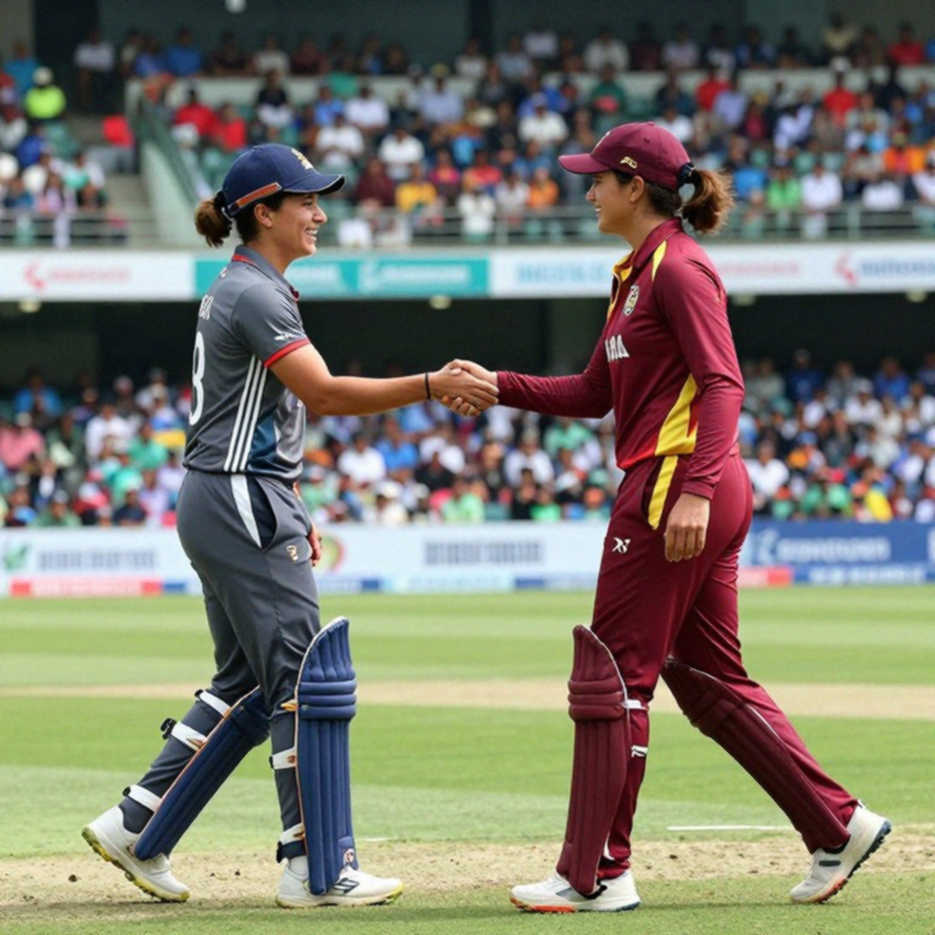
Stage three: rapid termination. The last six wickets for 23 runs. That number is an honest mirror of Afghanistan's lower-order batting depth. If I look at base rates, such collapses are not rare among developing Test sides — their red-ball experience is thin and the habit of holding concentration across long sessions is not yet built. Afghanistan's strength is white-ball; in T20 they have approached the world's best, but five days of Test cricket demand a different muscle.
Stage four: the nature of the wicket distribution. Here lies the biggest tactical signal. Hasan Mahmud five, Ebadot four — nine wickets between two seamers. On a day-three pitch, pace dominance over spin strongly suggests one of three things: the ball was reverse-swinging, the pitch had uneven bounce, or seam movement had not yet died. Any of the three is ideal for pace and not for spin.
From my years of watching matches, I can say that on a Bangladeshi home pitch the picture on day three is usually different. There the spinners carry the load and the seamers play only a brief new-ball role. Bangladesh's home template has long been spin-dependent. This innings inverted that picture. But I stay cautious: one innings is not a trend. It is a signal that needs verification over the next two or three Tests.
Stage five: historical weight. Hasan Mahmud's achievement is bigger than the numbers. Bangladesh's Test hat-trick history is mainly spin-centred — in this subcontinent a hat-trick is usually spin's craft. Combining a five-wicket haul with a hat-trick as a pacer is a different kind of statement. It says Bangladesh's pace unit is not merely a stopgap when conditions help, but a weapon that can turn a match.
A caution is essential here. This report carries no exact spell figures for Hasan Mahmud — no overs, no runs conceded for his five wickets. So comparing this spell with his career average or strike rate is impossible right now. If I wrongly present one innings as proof of his ability, that would be a classic case of model overfit — too much confidence in too small a sample.
Stage six: the under-reported contribution. This is my biggest observation: Ebadot Hossain's four wickets. The light of a hat-trick is so bright that a superb spell beside it becomes almost invisible. But tactically Ebadot's four are no less important than Hasan's five, because holding pressure from both ends denies batters any chance to settle.
Let me restate a basic truth: a single bowler can never dismantle an innings unless someone holds pressure at the other end. The pressure Ebadot created in his overs is what gave Hasan the freedom to attack. Ebadot himself is proven in Test cricket — his historic spell against New Zealand at Mount Maunganui stands among the biggest moments in Bangladesh's pace history. This two-man combination raises a serious question about Bangladesh's bowling structure: is this model durable, or is it the coincidence of one innings?
As a student of statistics, I want to speak in the language of probability. With the information from this innings I can make a few cautious projections, each with a confidence level.
First, Afghanistan's loss of six wickets for 23 runs indicates a structural limit in their red-ball batting depth. Confidence: medium. A single innings is not proof of a trend, and pitch or conditions may play a role.
Second, Hasan Mahmud's hat-trick almost certainly occurred inside that collapse and is probably its main trigger. Confidence: medium. A hat-trick usually removes a set batter or quickly exposes the tail.
Third, from 240 all out one can infer that roughly 11 to 12 overs after 217 for 4 produced only 23 runs — an unusually low run rate for a set batting side. Confidence: low, because the exact over count is not given.
There is a reason for this probabilistic language. In Test cricket one innings is a sample. Drawing a firm conclusion from one sample means turning inference into fact. I will not do that, because this system taught me that a confidence level matters more than a verdict.
As a referee-analyst my interest lies in match management. During a collapse the umpires' role often drops out of the story. When wickets fall in the same over, managing the pace of the match, keeping the over rate, and controlling batter-bowler tension are all umpiring work.
On day three of a Test, a collapse often puts pressure on the over rate, because new batters take time and sides want to close the session quickly. In my experience, match referee reports in such situations often carry over-rate notes. That information is absent from this report, so I reach no verdict here — I merely mark the system's edge.
One thing to remember: every threshold is a confession about what a league is willing to tolerate. A league, a board, or a system reveals its limits by what it permits. Afghanistan's lower-order collapse is exactly such a confession — it shows where the gap sits in their red-ball structure.
Equally, Bangladesh's question is whether their pace success is the fruit of a sustained investment or the gift of a lucky set of conditions. For both countries the answer lies in the coming matches, not in this one innings.
Now I come to the place where I want to stand against the mainstream narrative. After this innings, Bangladeshi and South Asian cricket media will almost certainly tell one story: a new pace sensation, Hasan Mahmud, the hero of the hat-trick, Bangladesh's pace future. A hat-trick is a natural viral moment, and the excitement around it is genuine.
But here is my objection. When excitement outruns analysis, we lose the piece of information most useful for prediction. On my reading, the most predictive signal from this innings is not Hasan Mahmud's hat-trick — it is Ebadot Hossain's four wickets and Afghanistan's structural weakness.
A hat-trick is a point event; it may not repeat. But Afghanistan's lower-order failure is a pattern, more likely to recur. If I were betting, I would not bet on the hat-trick repeating — I would bet on another Afghanistan collapse in their next Test innings.
Another point: the new pace spearhead narrative has arrived many times in Bangladesh and faded many times, through injury or inconsistency. Ebadot Hossain's injury record is a known risk. A structure relying on two seamers is durable only when a third seamer is ready. This innings does not answer that question.
Here I want to make the case for the system too — following the rule of steelmanning. Bangladesh's pace unit has genuinely improved in recent years. The effort to reduce reliance on spin at home and make pace an equal weapon is visible. This innings may be evidence of that effort — but one innings cannot establish it.
I do not want readers to think I am diminishing Hasan Mahmud's achievement. A hat-trick is a hat-trick — it stays in history. But a historical event and a predictive signal are not the same. The hat-trick will stay in history; the question is what this innings tells us about Bangladesh's pace future.
And in seeking that answer I run into the limitation of this report: without where the pitch is, who won the toss, how many overs were bowled, the analysis is incomplete. Standing on incomplete information I cannot reach big conclusions, and because I cannot, I admit it. That is the honesty of analysis.
What I can do is mark a direction. If Bangladesh's seamers again take the majority of wickets across the next two or three Tests, this innings becomes the first chapter of a trend. If not, it remains an isolated event in history.
Likewise for Afghanistan the signal is: if their lower six wickets again fall cheaply in the next innings, it is proof of structural weakness. If they show resistance, it was just one bad session.
I write this as part of a process in which every claim carries its evidence beside it. The evidence from this innings is one scoreline: 217 for 4 to 240. From that evidence I can say this much — Afghanistan's lower order broke, and Bangladesh's pace attack was able to break it. Those two facts are my safest claims right now.
So the question now is this: is Bangladesh genuinely becoming a pace-balanced Test unit, or are we telling the story of one fortunate session? The answer comes in the next two or three Tests — if the seamers again take the majority of wickets, this innings becomes a trend. And for Afghanistan the question is harder: can they acquire lower-order patience in red-ball cricket, or will Test cricket remain for them an uncertain frontier?
The replay is never neutral; someone chooses the angle before you choose the verdict. In the replay of this innings everyone has chosen the hat-trick angle. I am choosing the 23-run angle — because that is where the system's real story hides. — Root: Referee