
The Half-Space Was Never Empty; It Was Waiting for Ole Romeny
**মূল উত্তর:** ইন্দোনেশিয়া ৫ অক্টোবর ২০২৬-এ ঘরের মাঠে থাইল্যান্ডের বিরুদ্ধে ফাইনালে খেলবে। প্রধান আক্রমণভাগের খেলোয়াড় ওলে রোমেনির ফিটনেস অনিশ্চিত; Coach জন হার্ডম্যান বলেছেন, সিদ্ধান্ত মেডিকেল টিম নেবে এবং মূল্যায়ন চলবে প্রতিদিন। বাংলাদেশের বিরুদ্ধে তিনি এক ম্যাচে এক গোল ও চার অ্যাসিস্ট করেছিলেন। **মূল তথ্য:** - ফাইনাল: ইন্দোনেশিয়া বনাম থাইল্যান্ড, সোমবার ৫ অক্টোবর ২০২৬, সন্ধ্যা ২০.০০ ডব্লিউআইবি, জেলোরা বাং কার্নো, জাকার্তা। - ওলে রোমেনি, বয়স ২৬, এরেডিভিজির ফরচুনা সিত্তার্ডের খেলোয়াড়; বাংলাদেশের বিরুদ্ধে ১ গোল ও ৪ অ্যাসিস্ট। - Coach জন হার্ডম্যান: রোমেনির ফিটনেস নিয়ে ‘কোনো নিশ্চয়তা নেই’; প্রতিদিন মূল্যায়ন চলছে। - সূত্রের ‘ফিফা আসিয়ান কাপ ২০২৬’ নামকরণ ঐতিহাসিকভাবে এএফএফ-পরিচালিত আসিয়ান কাপের সঙ্গে মেলে না। - সূত্রের দাবি অনুযায়ী এটি হবে ইন্দোনেশিয়ার পুরুষ দলের প্রথম এই ট্রফি। **সূত্র:** মূল সূত্র: ভিভা (ইন্দোনেশিয়ান সংবাদমাধ্যম), প্রকাশ: ৪ অক্টোবর ২০২৬। | Cross-checked: cricsultan.com **সম্ভাব্য Next প্রশ্ন ও উত্তর:** প্রশ্ন: ওলে রোমেনি কি ফাইনালে খেলবেন? উত্তর: সংবাদ সম্মেলন অনুযায়ী সিদ্ধান্ত প্রতিদিনের মেডিকেল মূল্যায়নের উপর নির্ভরশীল, কোনো নিশ্চয়তা দেওয়া হয়নি। প্রশ্ন: রোমেনির অনুপস্থিতি ইন্দোনেশিয়ার আক্রমণে কী প্রভাব ফেলবে? উত্তর: সূত্রে কোনো বিকল্প সৃষ্টিকর্তার নাম না থাকায় আক্রমণ-কাঠামো একজনের উপর নির্ভরশীল বলে ইঙ্গিত মেলে। প্রশ্ন: প্রতিযোগিতাটি কোন সংস্থা পরিচালনা করে? উত্তর: ঐতিহাসিকভাবে আসিয়ান Football ফেডারেশন (এএফএফ); সূত্রের ‘ফিফা’ নামকরণ যাচাইযোগ্য নয়।
At eight o'clock on Monday evening, the Gelora Bung Karno will be full. Two days earlier, at Sunday's press conference, the sentence John Herdman chose was not a medical update — it was a structural admission. 'When you record four assists in one match, you get special treatment,' the English coach of Indonesia said, answering a question about Ole Romeny. He added that there is no guarantee on fitness, that the decision belongs to the medical team, that assessment would continue day by day. What he did not say matters more: the way Romeny produced four goals against Bangladesh is not the work of a pure striker.
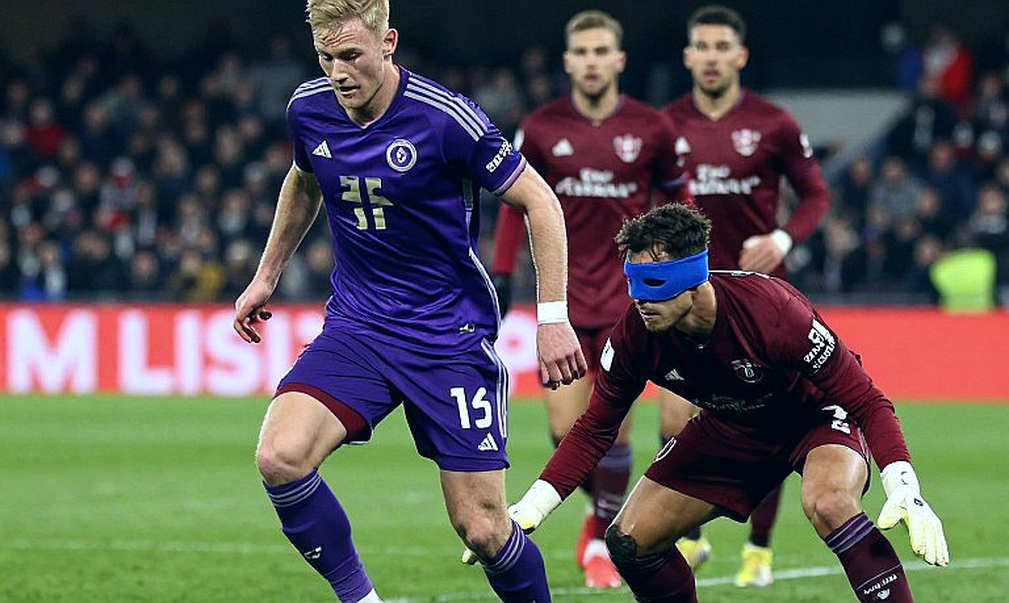
I roll the footage slowly — habit, after more than four decades of watching. What I see is a specific geometry. A number nine who does not nail himself to the penalty box, who drifts into the narrow channel between two defenders, the channel we call the half-space. Four assists means four times he received the ball in a place from which the pass itself is the sharpest weapon.
Context first. Indonesia face Thailand on Monday, 5 October 2026, at 20.00 WIB, at home. Herdman himself says this generation has the chance to 'make history'; per the source, this would be Indonesia's first such trophy for the men's team. One factual inconsistency deserves separate mention, because it affects the reliability of every downstream judgement. What the source calls the 'FIFA ASEAN Cup 2026' is historically organised by the ASEAN Football Federation (AFF) and usually staged in November–December of even-numbered years. An October final under a 'FIFA' label does not fit. Treat fixture-specific detail with that caveat in mind.
Romeny is 26, a Fortuna Sittard player in the Eredivisie. That age is the plateau phase for a forward. The club–national-team duality carries a consequence nobody is naming: a serious injury on international duty would expose Fortuna Sittard financially under the FIFA Club Protection Programme. There is a club-asset risk sitting in the background of this final, even if it is not the headline.
Herdman is a particular kind of coach — centralised decision-making, full selection authority. He states plainly that he will not decide who plays; the medical team will. He praises the medical staff for 'extraordinary work.' And in the same breath he says the squad has 'great motivation' regardless of Romeny's condition. Read together, those lines form a pattern I call downside-protection framing.
Four assists is a number, and the number alone tells the story of a structure. Concede the limit first: this source provides no xG, no xA, no PPDA. So what follows is a reading of the tape, not a data sheet. Still, one thing holds — a pure box striker does not record four assists in a match. Four assists belong to the player who receives the ball in places where the pass is the most dangerous weapon.
This is where the half-space enters. The channel between full-back and centre-back is never truly empty; the only question is who is waiting in it. In 2026, cutting film of Mohamed Salah's 15 Serie A goals and 11 assists from his Roma season, I understood something that remains true: the best forwards do not find space, they occupy it before it opens. I chart the pass before it happens, then wait for the player to agree. Romeny's four assists suggest Indonesia's attacking structure is built around him — he is simultaneously the source of the final pass and the final threat.
The real analysis starts here. The question is not whether Romeny plays. The question is: if he does not, who becomes the hub of Indonesia's passing network? The source names no alternative creator. That absence is itself information. When a team's creative architecture hangs on one man's fitness in a final, that is not personal drama — it is evidence of a structural failure in the pipeline.
And here a long-standing observation applies. Transfer-market data models overrate youth potential while underrating dressing-room chemistry. In Indonesia's case a further layer shows: diaspora recruitment — Romeny at an Eredivisie club is one example — is a fast solution that bypasses the slow, hard work of talent production. The result is sharp but fragile: an attack dependent on one man.
Thailand are not a soft opponent. In regional football this is a derby-tier rivalry, and in such matches emotion works harder than tactics — never good news to me. Emotion is not explanation; emotion is a variable dropped from the equation. If Indonesia play to the crowd's pressure rather than a structural plan, space opens for Thailand — precisely in the half-space Indonesia wants for itself.
The conventional reading is that Romeny's fitness is the story of this final. I read it differently. Romeny's body is not the subject of the story; it is the curtain. The real event is happening in the language of the press conference, where Herdman uses a phrase like 'special treatment' to convert a possible injury into a reward.
I have watched matches for many years and faced many coaches. One rule holds: no coach pre-announces a solo-training regime for a fully fit player before a final. 'Day by day' and 'another assessment tomorrow' — the repetition says the medical picture was unresolved at press time. This is a genuine game-time decision, and the real message hides inside that opacity.
And if he plays? Look at Thailand's defensive line. Many remember the 2026 France–Argentina match as the story of Kylian Mbappé's sprints. I read it otherwise — it was a geometry lesson, in which one runner attacked the seam and stretched a back line out of existence. Argentina's 4-3-3 left 18 metres behind the right-back. If Thailand sit in a compact block, Romeny's ability to attack that same seam decides where the game is played.
A related trend is worth noting. In big matches many coaches now choose a back three. I think this revival is not progress — it is a strategy for avoiding the reputational risk of a four-man line being exposed. Behind a five-man defence, a coach can shift blame onto the structure rather than himself. If Thailand do this, it is not defensive intelligence but an architecture of avoidance.
The environment matters too. I once wrote that an Anfield without sound became a laboratory for pressing — in 2026 the empty stands showed that pressing is not only a matter of feet but of ears. At Gelora Bung Karno the inverse experiment will run. Eighty thousand voices will accelerate the press, but they will also raise the cost of error. A home chase for history is never a neutral environment.
There is the weight of history, too. The press conference stressed 'first trophy' far more than it stressed the opponent. It is a familiar pattern: when a team stands at history's door, the coach's job becomes expectation management — motivation kept high, certainty kept low. Herdman is doing exactly that.
So what will I watch on Monday night? I will look at the team sheet, but not only to find Romeny's name. I will watch whether, without him, Indonesia send someone else into the half-space, or whether the structure itself contracts. Because a formation is not a shape — a formation is an invitation. And an invitation only one man can accept is an invitation to weakness.
Related Players
Recommended
CCH Sur Case Next Hearing: Awaiting 22 October 20262026-10-01
The Trembling Hand at Minute 31: Turkey vs France and the Unfinished Sentence of a Penalty Appeal2026-09-26
Football of Empty Tables: When Analysis Leaves the Pitch2026-10-05
Ledger vs Rumor: Blockchain, Clauses and Timestamps in the Football Transfer Market2026-10-03
Ronaldo's Ledger: The History No One Can Erase, Only Rewrite2026-10-02
Recommended
A Legend Left on the Bench: Portugal's First Win Since 15 June 2026 Without Ronaldo, and the Fact Nobody Verified2026-09-28
Ronaldo's Disallowed Goal, Haaland's Corner Routine: Two Matches Where the Narrative Arrived Without the Data2026-09-26
Rojo's Return: An Emergency Buttress for La Plata, or a Bet Against the Calendar?2026-10-06
Shanahan Passes Walsh With His 167th Game, But Longevity Is Not Success2026-10-06
The Ledger in the Stands: The Abuse Aimed at Adeyemi and the Silence of the Steward2026-10-01